Pros
- MIPS technology reduces rotational brain injuries
- Roc Loc 5 fit system for precise, secure adjustment
- 25 vents keep it comfortable for hours of wear
- Lightweight in-mold shell, barely noticeable on the head
- Meets CPSC safety standard
- Wide range of low-profile color options
Cons
- Single-impact design: replace after any real hit
- Higher price than a basic bike or skate helmet
- Less coverage than a full skateboard-style helmet
- Vents that keep it cool also mean less blunt protection than a solid shell
Check Amazon for current pricing
The Giro Syntax MIPS is a road cycling helmet that has quietly become one of the more common sights at protests, not because it was designed for crowd situations, but because it does two things well that matter there: it protects against rotational head injuries, and it’s light enough that people actually keep it on for hours. This review covers whether that combination justifies picking it over a skate helmet or a hard hat for protest use.
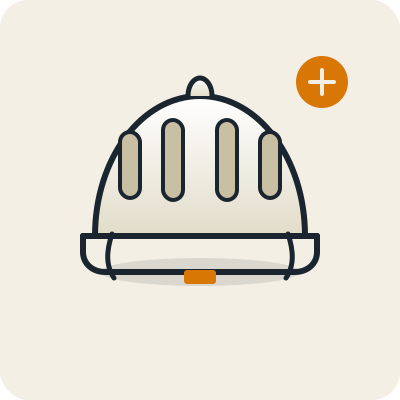
Giro Syntax MIPS Adult Bike Helmet
Check Amazon for current pricing
The Syntax is Giro's mid-tier road helmet, built around MIPS brain protection, an in-mold polycarbonate shell, and a dial-adjust fit system. It's designed for cyclists, but the same qualities that make it good on a bike make it a reasonable pick for extended wear in a crowd.
Pros
- MIPS technology reduces rotational brain injuries
- Roc Loc 5 fit system for precise, secure adjustment
- 25 vents keep it comfortable for hours of wear
- Lightweight in-mold shell, barely noticeable on the head
- Meets CPSC safety standard
- Wide range of low-profile color options
Cons
- Single-impact design: replace after any real hit
- Higher price than a basic bike or skate helmet
- Less coverage than a full skateboard-style helmet
- Vents that keep it cool also mean less blunt protection than a solid shell
Who This Helmet Is For
The Syntax was never designed with protests in mind, and that’s worth being upfront about. It’s a road cycling helmet. What makes it show up on our best helmets for protests guide anyway is that the traits cyclists want, low weight, good airflow, and a fit that stays secure through hours of movement, are the same traits that matter when you’re standing in a crowd for an afternoon rather than a 20-minute ride.
If your main risk is falls, jostling, or being caught in a crowd surge: the Syntax’s MIPS liner is built specifically for the glancing, rotational impacts that happen when a head hits pavement or another surface at an angle, not straight on. Those rotational forces are a major contributor to concussions, and MIPS is one of the more well-studied mitigations available in consumer helmets.
If you expect direct impacts from thrown or fired projectiles: the Syntax is not the right tool. It’s a single-impact helmet with a vented shell, not a helmet rated for blunt force from batons, rubber bullets, or thrown objects. For that level of risk, a full-coverage skate helmet like the Triple Eight Dual Certified or an industrial hard hat is a better match, and we cover both in the main helmet guide.
If you’re going to be wearing it for hours in warm weather: this is where the Syntax earns its spot. Twenty-five vents and a genuinely light shell mean people keep it on instead of taking it off after 20 minutes because it’s hot and uncomfortable. A helmet that gets removed halfway through the day protects you for exactly zero percent of the time it’s off your head.
Build Quality and Fit
The shell is in-mold polycarbonate over an EPS foam liner, which is standard construction for road helmets in this price tier. It’s not a thick or heavy build, and it isn’t meant to be. The tradeoff for that low weight is that this is a single-impact helmet: EPS foam compresses to absorb an impact and doesn’t return to its original shape, so a Syntax that’s taken a real hit needs to be replaced even if the shell looks intact from the outside.
The Roc Loc 5 fit system is the part that actually matters most for hours-long wear. It’s a rear dial that tightens a cradle around the back and sides of your head rather than just cinching a chin strap. Once it’s dialed in, the helmet stays put through fast walking, ducking, and turning your head repeatedly to track what’s happening around you, without the pressure points that cheaper four-point strap systems tend to develop after an hour or two.
Twenty-five vents run front to back, and the effect is noticeable compared to a solid-shell skate helmet: air actually moves through it. In hot weather this is the difference between a helmet you keep wearing and one you end up carrying.
MIPS Explained (and Why It’s Not Marketing Fluff)
MIPS stands for Multi-directional Impact Protection System. It’s a thin, low-friction layer between the foam liner and your head that lets the helmet’s shell rotate slightly relative to your skull during an angled impact. Most head impacts aren’t straight-on; they come in at an angle, and that angled contact creates rotational force on the brain, which is a significant factor in concussion severity.
MIPS doesn’t do anything for a straight-on impact that basic EPS foam wasn’t already handling. What it adds is a measurable reduction in the rotational component of an angled hit, which is the more common real-world scenario, whether that’s a fall, a shove, or getting knocked sideways in a crowd. It’s genuinely useful technology, not a premium sticker with no substance behind it, and independent testing bodies including Virginia Tech’s helmet ratings program have consistently scored MIPS-equipped helmets well on rotational metrics.
Comfort Over a Full Day
This is the category where the Syntax separates itself from the skate helmets and hard hats also covered in our best helmets for protests guide. At roughly 290 grams, it’s noticeably lighter than the Triple Eight Dual Certified (450g) or the 3M Hard Hat (370g). That weight difference sounds small on paper, but over three or four hours it adds up to real reduction in neck fatigue.
The ventilation matters just as much. A hard hat protects the top of your head well but traps heat with essentially no airflow. The Syntax’s open channel design means you’re not sweating through your shirt by hour two. For anyone who has tried to wear a hot, poorly ventilated helmet for an extended event and given up, this is the practical reason the Syntax keeps coming up as a recommendation despite not being purpose-built protest gear.
Giro Syntax vs. the Alternatives
If you’re deciding between this and the other options in our helmet guide, here’s the honest breakdown:
Syntax vs. Triple Eight Dual Certified: The Triple Eight covers more of your head and is multi-impact rated, meaning it can take repeated hits without needing replacement. It’s also heavier and less ventilated. If you expect to actually take impacts, or want a helmet you don’t have to inspect after every bump, the Triple Eight is the safer call. If your priority is rotational protection and all-day comfort with a lower expectation of direct impacts, the Syntax wins.
Syntax vs. 3M Hard Hat: The hard hat is unbeatable for pure overhead protection against falling or thrown objects from above, and it’s the cheapest option by a wide margin. It offers close to nothing for side-impact or rotational protection, and it’s genuinely uncomfortable for extended wear. The Syntax protects a different risk profile entirely; they’re not really substitutes for each other.
The honest tradeoff: the Syntax is the right choice if you’ve assessed your risk as being mostly about falls, crowd jostling, and general fall protection rather than direct projectile or baton impacts, and you value actually keeping the helmet on for the full duration of an event. If your risk assessment points toward projectiles or sustained physical confrontation, look at the multi-impact and full-coverage options in the main guide instead.
Verdict
Buy the Giro Syntax MIPS if you want a helmet that’s light enough and cool enough that you’ll actually wear it for hours, with genuine rotational-impact protection from MIPS. It’s a strong pick for anyone whose main risk is falls or crowd-related impacts rather than direct projectile strikes.
Skip it if you’re specifically preparing for scenarios involving thrown objects, batons, or rubber bullets. In that case, the multi-impact, full-coverage options in the best helmets for protests guide, or a hard hat for pure overhead protection, are the more appropriate choice.
FAQ
Is a road bike helmet actually safe to wear at a protest?
Yes, for the risks it’s designed to address. A CPSC-certified bike helmet with MIPS provides real protection against falls and rotational impacts, which are common in crowd situations. It is not designed for direct projectile impacts, so match the helmet to your actual risk assessment rather than assuming any certified helmet covers every scenario.
What does MIPS actually protect against that a normal helmet doesn’t?
MIPS specifically reduces rotational force transmitted to the brain during angled impacts, which are more common than straight-on hits in real falls and collisions. A standard EPS foam liner without MIPS still absorbs direct impact energy reasonably well; MIPS adds a layer of protection against the rotational component that standard foam doesn’t address as effectively.
Do I need to replace the Syntax after every fall?
Replace it after any impact where your head made contact with a hard surface or object, even if the shell looks undamaged. EPS foam compresses permanently to absorb impact energy and doesn’t return to its protective shape, so visible damage isn’t a reliable indicator of whether the helmet is still safe to use. When in doubt, replace it.
How does the Syntax compare to a skateboard helmet for protest use?
A skateboard helmet like the Triple Eight Dual Certified offers more head coverage and can take multiple impacts without replacement, making it the better choice if you expect repeated or direct impacts. The Syntax is lighter, cooler, and better suited to all-day wear where the main risk is falls rather than sustained impact. Neither is strictly better; they’re built for different risk profiles.
Can I wear goggles or a face covering with this helmet?
Yes. The Syntax’s low-profile design and standard strap system work fine with most safety goggles and face coverings. Because it doesn’t have an integrated visor or full-coverage skirt like some skate helmets, there’s nothing to interfere with goggle straps running behind the head.
Is the price difference from a basic bike helmet worth it?
If rotational-impact protection matters to you, yes. MIPS is a specific, tested technology, not a marketing label, and it’s one of the more meaningful upgrades you can make in a helmet at this price point. If budget is the primary constraint, the 3M Hard Hat covers a different but legitimate protection need at a much lower cost.
As an Amazon Associate, we earn from qualifying purchases.